Live · 2026
Moodverse
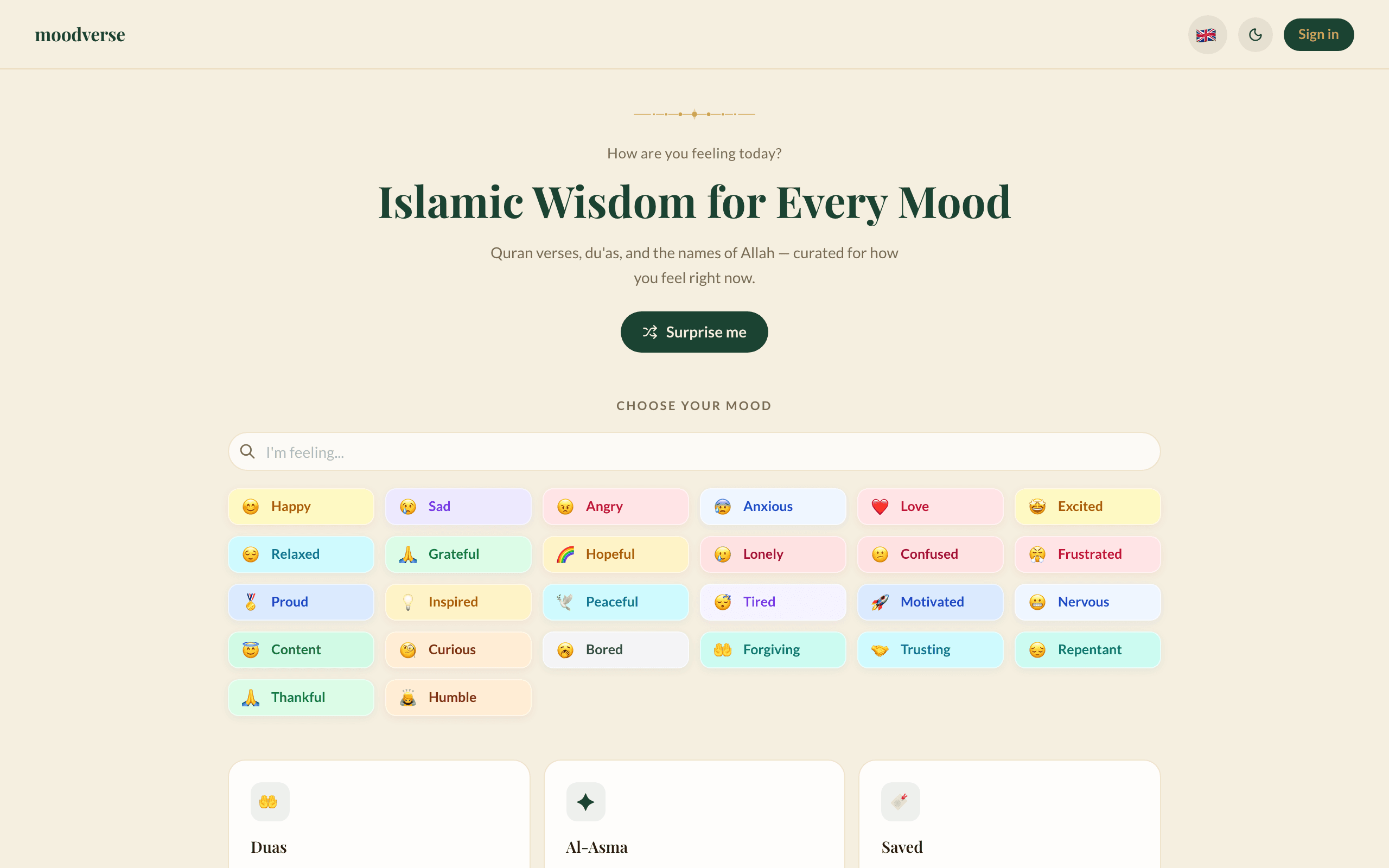
Comfort from the Quran and duas, matched to how you feel.
01
The problem
Most wellness apps are generic and not built with Muslims in mind. If you're going through a hard time and want spiritual support, there was no app that takes how you feel right now and shows you the right verse or dua. You had to already know which one applies.
02
The build
Moodverse lets you log your mood from 25+ options and shows you matching Quran verses and duas from the Prophet ﷺ. The collection covers 94+ supplications from Hisnul Muslim. A live global feed shows mood logs from other users in real time.
25+
Moods
94+
Duas
Web
Platform
03
The outcome
Live on the web with a growing number of daily users. The biggest lesson was that the list of moods matters more than the UI. Finding the right set, broad enough to cover everyone but specific enough to feel accurate, was the hardest part.